A search for Fintwist can produce a current product page, an older employer handout, a cardholder comment and a Comdata fleet page. They may share words without describing the same people, product or period. Before asking whether the evidence is persuasive, decide what the evidence is about. Otherwise, a careful calculation can answer the wrong question with impressive precision.
The official Corpay Prepaid page identifies the Fintwist name transition and distinguishes payroll and other disbursement products. The separate Comdata homepage covers fleet products. Those public observations establish a need for boundaries; they do not establish which customer experiences belong in any particular research dataset. This guide builds an original scope method, not a product rating.
Write a question small enough to investigate
Start with a sentence that names an observable object. ‘What does the current public page say about the condition on a bank-transfer feature?’ is answerable from a public passage. ‘Is Fintwist good?’ contains several unstated questions about cost, reliability, access, suitability and personal preferences. A research brief that keeps the second question should acknowledge that one source cannot answer all its components.
Consider a fictional researcher, Avery, who wants to compare explanations of prepaid account features. Avery initially collects anything mentioning Fintwist. After noticing unrelated fleet material, Avery changes the question to: ‘How are feature conditions described on the current public prepaid page?’ The revised question does not exclude criticism or praise. It prevents an unrelated fuel-card claim from being counted as evidence about a wage card.
Write an inclusion rule before collecting examples. For Avery, a record qualifies only if its source identifies the prepaid product context and contains a relevant feature statement. Record excluded material and the reason for exclusion in a short separate list. This makes it possible for another reader to see whether an awkward observation was rejected because it was irrelevant or merely inconvenient.
Keep four labels separate
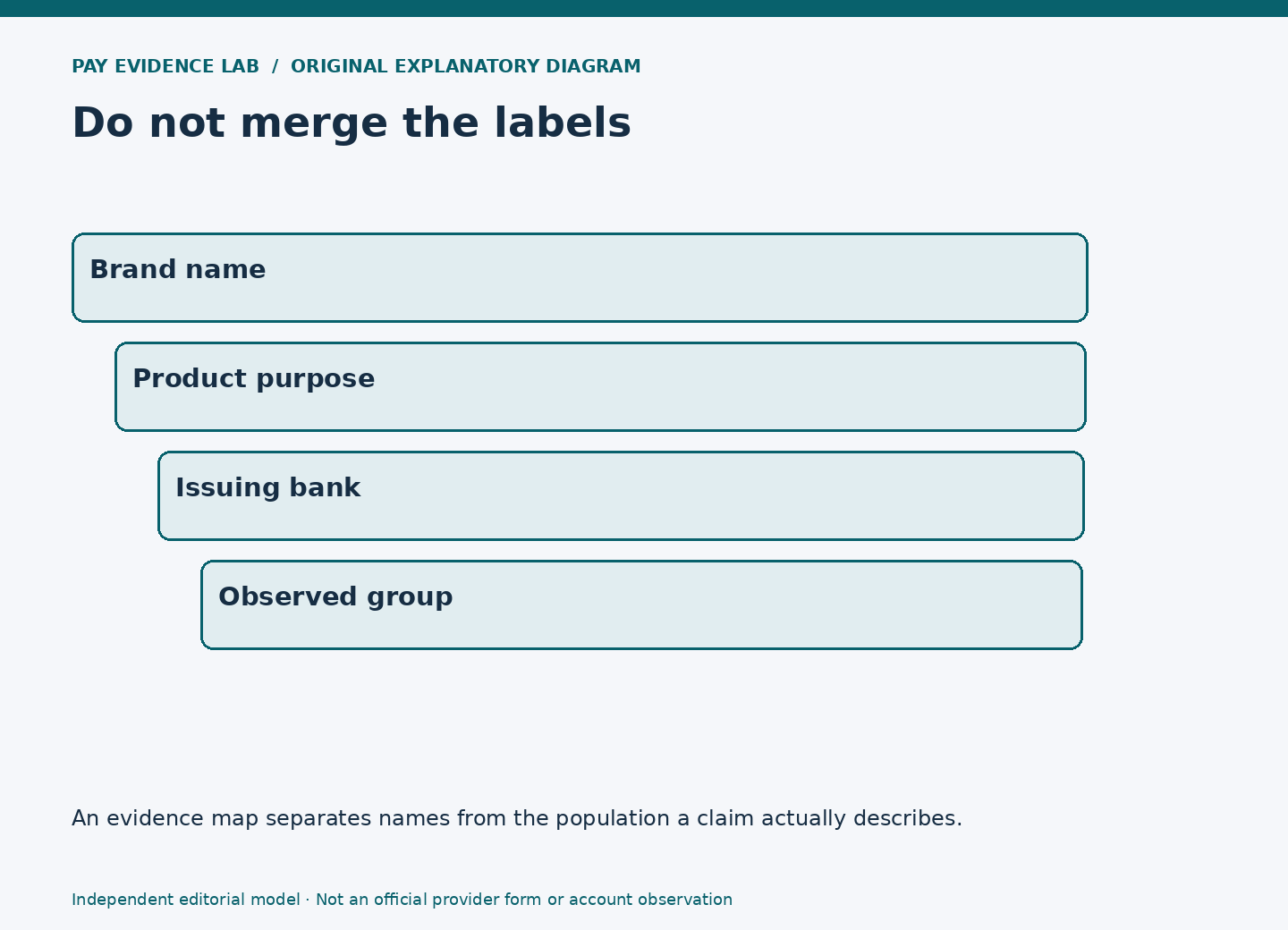
Brand is the public name readers recognize. Product purpose is what kind of disbursement the material describes. Issuer identifies a financial institution when the applicable source establishes it. Population is the set of people, accounts, transactions or documents actually observed. These labels can be related without being interchangeable. A program can have a recognizable name while a particular study observes only one employer’s respondents.
Use a scope row with five fields: source title, named product, observed unit, period, and unresolved boundary. Do not fill issuer or account status from an assumption. If a source is a general homepage, the observed unit may simply be ‘public wording on this page.’ That modest label is more accurate than pretending the researcher has observed cardholder outcomes.
Keep the public brand transition in the naming field and retain the source’s original wording in your research notes. An old label does not automatically mean an old term still applies. A new label does not automatically prove that every feature, agreement or experience changed. A crosswalk should help you search and attribute; it should not silently rewrite the historical record.
Run a boundary test before collecting more
Present two fictional records to your scope rule. The first is a current prepaid page describing a conditional feature. The second is a fleet page advertising a different product’s savings. If both pass because they share a corporate name, the rule is too broad for a prepaid-feature question. If the first fails because it does not contain a customer story, the rule is mismatched to a public-wording question.
Now test a harder record: an undated comment that names Fintwist but gives no employer, product type or observation period. It may be useful as a question to investigate. It cannot safely supply the missing program identity. Put it in an ‘uncertain scope’ set rather than forcing a yes/no inclusion decision that looks more certain than the evidence.
Scope is allowed to change when research reveals a better question. Record the change and rerun earlier decisions using the revised rule. Do not expand the population only after finding a result you want to include. A transparent revision explains why the initial question was inadequate and what previously collected material now belongs outside the analysis.
Deliver a scope statement, not a verdict
A useful final statement might say: ‘This review examines the wording on the current public prepaid homepage as observed on the stated review date. It does not examine individual agreements, account behavior, all employer programs or customer satisfaction.’ That tells the reader what the work can establish before a conclusion appears.
For a larger project, attach an inclusion table with a small number of examples and their decisions. Keep public source addresses and document descriptions, not private account records. Readers should be able to repeat the public-source classification without learning anyone’s identity or submitting payment information to this website.
The completion test is practical: can another person explain which records belong, which do not, and which remain uncertain without asking what result you hoped to find? If yes, you have a research population. You have not yet established comparative quality, personal suitability or a market-wide outcome, and your next analytical step should preserve that distinction.
Continue the investigation
Sources and scope
- External official source: Corpay Prepaid: public product and issuer context — Name transition, PayCard/FlexCard distinction and conditions stated on the public page. Not an individual agreement or outcome study. Checked 2026-10-04.
- External official source: Comdata: fleet and fuel product homepage — A separate product context. Its fleet figures are not evidence about Fintwist prepaid cardholders. Checked 2026-10-04.